
When Fear Looks Like Aggression: Argus's Journey to Feeling Safe at the Vet

Few things feel more confusing or heartbreaking than watching your sweet, easygoing puppy suddenly start reacting aggressively.
For Tanya, that change happened gradually.
Argus came home at just 9 weeks old after an accidental litter of Golden Retriever puppies. His full sister, Bailey, was adopted by Tanya's sister and lived nearby, giving the dogs opportunities to grow up together. Argus was everything his family hoped for—easygoing, social, quick to house train, and eager to learn. He enjoyed neighborhood walks, adapted well to family life, and seemed destined to become an easy adult dog.
Then things slowly started to change.
Around 6–7 months old, Tanya began noticing that Argus seemed more hesitant around unfamiliar people. During an outing to a local brewery, a stranger approached and Argus barked and backed away. Thankfully, he recovered and was eventually able to warm up.
At the time, it didn't seem like a major concern.
But over the following months, his discomfort continued to grow.
By 10 months old, veterinary visits had become increasingly difficult. Argus was sensitive, easily startled, and began growling during examinations. By 15 months old, his fear had escalated into barking and lunging at veterinary staff.
For many families, this can feel shocking and embarrassing. Owners often wonder:
"How did my friendly puppy become reactive?"
The answer is often simpler than people think.
Fear.
Looking Beyond the Behavior
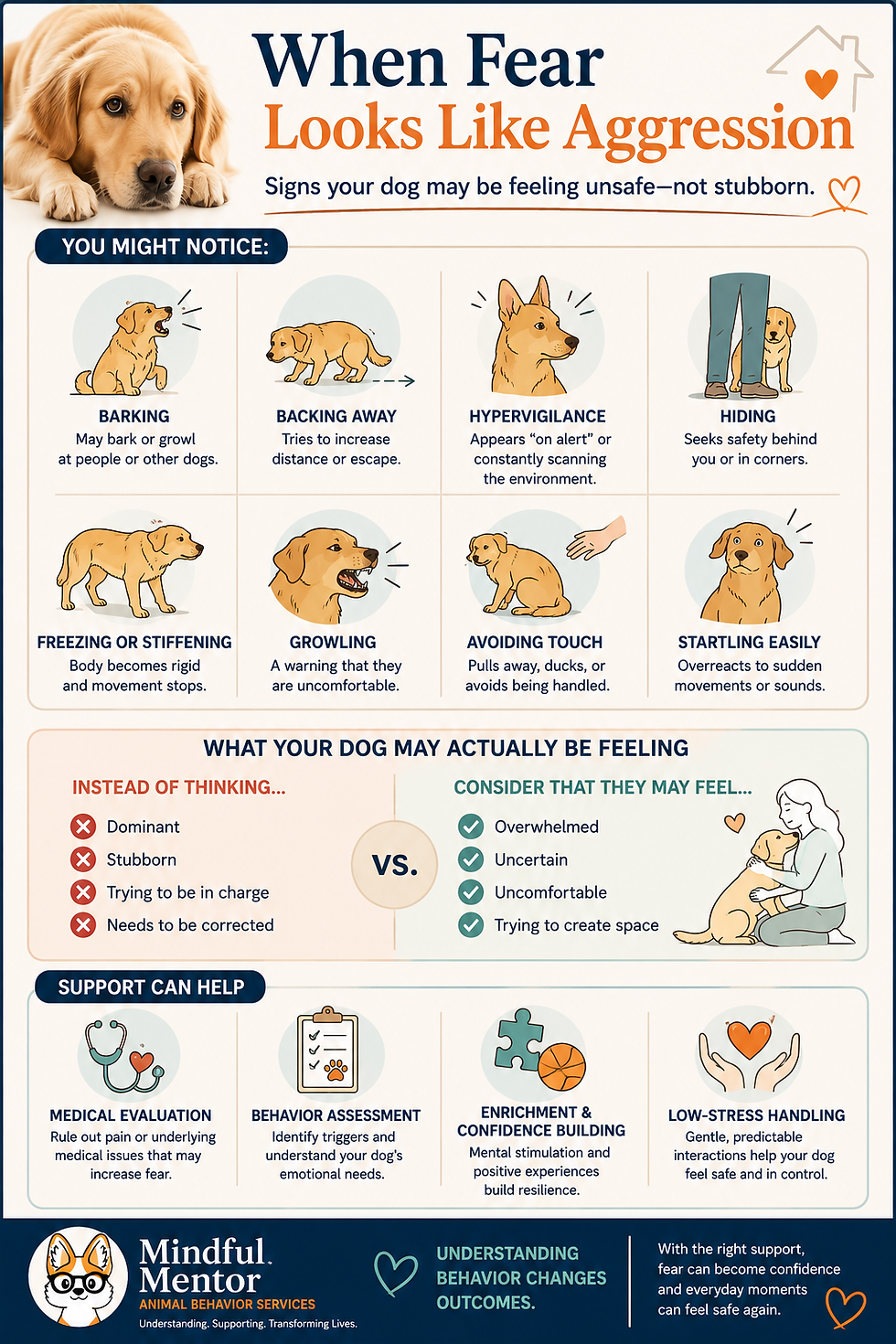
When Tanya met with her veterinarian, they recognized that Argus wasn't being difficult—he was struggling emotionally. They discussed medication options to reduce his immediate stress, introduced muzzle training for safety, and referred the family to Mindful Mentor for a full behavioral assessment.
When I first met Argus, he was understandably nervous. He barked occasionally, stayed tense, and startled easily.
Rather than pushing interaction, we gave him space and rewarded calm choices. Within about 30 minutes, Argus was voluntarily approaching and asking for affection.
That first session reinforced an important point: underneath the aggressive behavior was a dog who wanted to feel safe.
As we explored his history further, we realized there was more contributing to his emotional state than veterinary visits alone.
Argus showed signs of broader social discomfort with unfamiliar people, mild tension around sharing attention with another dog in the household, and strong attachment to Tanya. We also identified underlying gastrointestinal and skin concerns that may have been affecting his comfort and ability to regulate stress.
Building Confidence From the Inside Out
Our treatment plan focused on improving Argus's overall emotional wellbeing rather than simply trying to stop the aggression.
We increased his mental enrichment, reduced social stress at home, and worked with his veterinarian to address his medical concerns through dietary changes and digestive support.
As his physical comfort improved, so did his interest in food—which made training more effective and enjoyable.
At the same time, we created a low-stress veterinary plan.
This included changes to how appointments were handled, strategies to make the environment feel less threatening, and training exercises to help Argus build positive experiences with handling and medical care.
We introduced muzzle training as a confidence-building and safety tool—not as punishment—and practiced relaxation exercises and gentle touch at home before expecting success in the clinic.
The Results
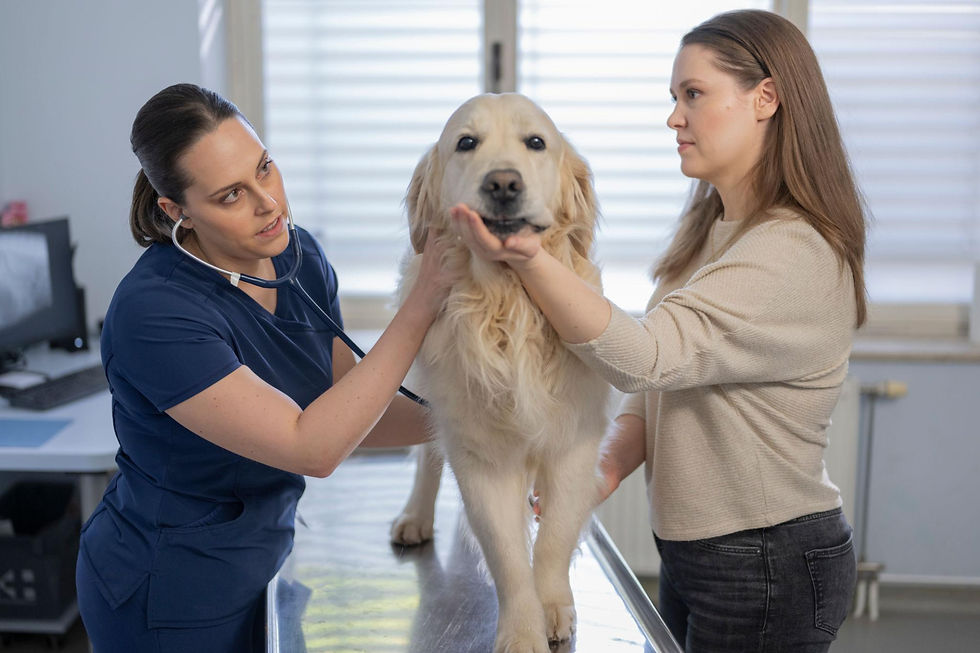
After only a few weeks of preparation and Tanya's incredibly dedicated training, Argus returned to the veterinary clinic.
This time, he was able to complete his visit, accept handling and medical care, and showed no signs of aggression.
Argus didn't become a different dog.
He became a dog who felt safer.
There Is Hope
Fear-based behavior can be overwhelming and often leaves families feeling discouraged or worried about the future.
But aggression is not a personality trait—and it doesn't mean your dog is bad.
When we take time to understand what a dog is feeling, address underlying medical concerns, and build confidence through thoughtful training, meaningful change is possible.
If your dog growls, barks, freezes, or struggles during veterinary visits or around unfamiliar people, support is available—and you don't have to figure it out alone.
----------
You don't have to figure it out by yourself. Separation anxiety can feel overwhelming, but many dogs can learn to feel safe and confident when left alone with the right support and guidance.


Comments